

Proofreading is the systematic checking of not only every word on the page, but every letter, punctuation mark, and minuscule detail.
Whether you are writing a novel, blog post, a business report, an academic paper, or anything else that will go to print or screen, you might be surprised at how easily you can overlook something in your own writing.
Your spellchecker may pick up on spelling mistakes, but can it spot things such as poor grammar, homophones or inconsistencies in dates?
Below you will find a list of some common mistakes I see very often that you might want to double check.
1. It’s vs Its
The English language loves to shorten and squash words together. An apostrophe is then’ used to indicate the missing letters. Words such as ‘plane, ‘phone and ‘bus have long since shed their apostrophe, but one that’s not going to go away anytime soon is the contraction ‘It’s‘, which many people still have problems using.
It’s is the contraction of it is or it has. I think it’s lovely here – I think it is lovely here. It’s been raining – It has been raining.
Not to be confused with ‘Its‘ which is the possessive form of it, and denotes belonging or ownership – Don’t judge a book by its cover.
2. Homophones
These are words that are pronounced the same, but have a different meaning and spelling. There are many in the English language and some are easy to spot, others no so. A brain on autopilot will tend to hear the sound and not pay attention to every letter and this is where mistakes can arise. Examples include:
Affect vs effect
Bear vs bare
Break vs brake
Compliment vs complement
Copywrite vs copyright
Flu vs flew
Formally vs formerly
Heel vs heal
Hole vs whole
Mail vs male
Pause vs paws
Peace vs piece
Stationary vs stationery
Their vs there vs they’re
Week vs weak
Weight vs wait
Write vs right.
3. The mistyped word
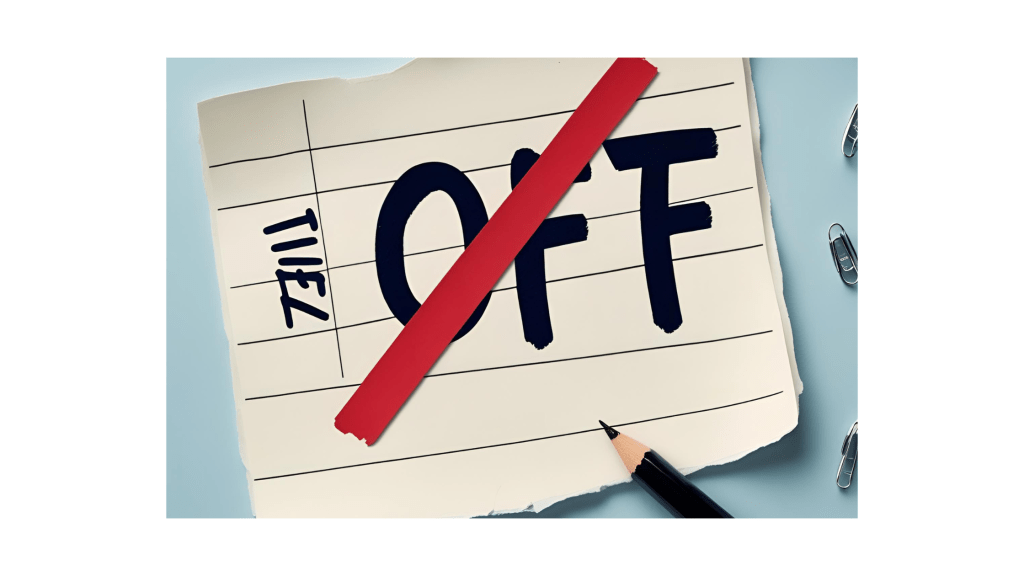
Ever come across a ‘now’ that should be a ‘not’, a ‘from’ that should be ‘form’, an ‘off’ that should be an ‘of?’ These types of errors are easy to make and easy to miss. They are correctly written words that your spellchecker will not always see as an error.
4. A missing opening or closing parenthesis
Another easily overlooked error is a missing parenthesis (bracket). They should always come in a pair and quite often do not. Why is this so easy to miss?
When typing a long stream of text, our brains are often faster than our fingers. Small details such as the closing bracket are easily forgotten.
One tip to avoid forgetting a bracket is to type one after each other: () open bracket then immediately close bracket, before filling inside what you need and moving on.
5. Dates and times
A very common mistake happens with dates. A published document I recently read had the date written as 10th January 2025 and January 10th 2025. Thank goodness it didn’t also include 10 January 2025 or January 10, 2025.
Times can also be tricky, is it 1’o clock, 1.pm 1.00pm, or 13.00? These small inconsistencies can be big distractions for your readers.
In summary
Our brains are constantly taking in sensory messages from the world and slightly altering them without us ever realising. This especially happens when you read your own work or review it over and over again.
Your eyes read the sentences and your brain goes on autopilot, sailing blithely past the errors right in front of it, taking in only the actual points you are trying to make. And this is completely normal.
This where a professional proofreader can help. Although no proofreader will tell you they are perfect, firstly, they are further removed from your text which makes it one step easier to catch errors.
Secondly, those of us with professional training have been taught to pay close attention to each and every detail, working with a systematic approach that is designed to catch all those nasty errors that can discredit your work.
Want to learn some more homophones, download a free handy PDF list of 100 homophones here. What’s not on my list? Let me know down below.
If you are looking for help to proofread your work, check out my proofreading and proof-editing services here.
 The Editorial Space
Leave a comment